Building a Repeatable Customer Acquisition System for Multiple Locations
Why a repeatable process matters for multi-market growth
When a business operates across several locations, the challenge is no longer finding customers in one place. It is doing so efficiently in every place, without reinventing the wheel each time. A repeatable customer acquisition process turns what could be a chaotic scramble into a predictable engine. That is the core of multi market optimization: designing workflows that work whether you are opening in a new city or scaling an established region. Without such a system, each location reinvents its own approach, wasting time and losing consistency.
The goal is to build a method that can be taught, measured, and improved across all your markets. This means standardizing the steps that work while leaving room for local adaptation. The following steps outline how to create that process, with specific things to watch at each stage.
Step 1: Define your customer acquisition channels per market
Not every channel performs the same in every location. A strategy that drives leads in one city may fall flat in another due to differences in regional demand, local competition, or platform usage. Start by listing the customer acquisition channels available to you: paid search, social media advertising, local SEO, partnerships, direct mail, or events. Then, for each location, research which channels are most active and trusted by the local audience.
What to watch: Avoid the temptation to use the same channel mix everywhere. A market where a competitor dominates paid search might require heavier investment in local content or community partnerships. Track the cost per lead and conversion rate for each channel in each market separately. This data will reveal which channels deserve more budget and which need adjustment.
Step 2: Build location-specific landing pages and funnels
Once you know which channels to use, create landing pages and funnels that speak directly to each local audience. A generic page rarely converts as well as one that references local landmarks, events, or language. This is where location targeting becomes essential. Each page should include locally relevant keywords, testimonials from customers in that area, and clear calls to action that match the local stage of the buyer journey.
What to watch: Do not duplicate content across locations. Search engines penalize thin or duplicate content, and users can tell when a page feels templated. Instead, invest in unique copy, images, and offers for each market. Use automated tools to help scale this effort without losing quality. For example, a software platform can help you manage these pages from a central dashboard, ensuring consistency while allowing local customization.
Step 3: Standardize lead qualification and tracking
A lead in one location may be ready to buy, while a similar lead in another may need more nurturing. Create a standard lead qualification framework that applies across all markets, but allow local teams to adjust the scoring criteria based on their experience. This ensures that sales efforts are focused on the most promising prospects everywhere.
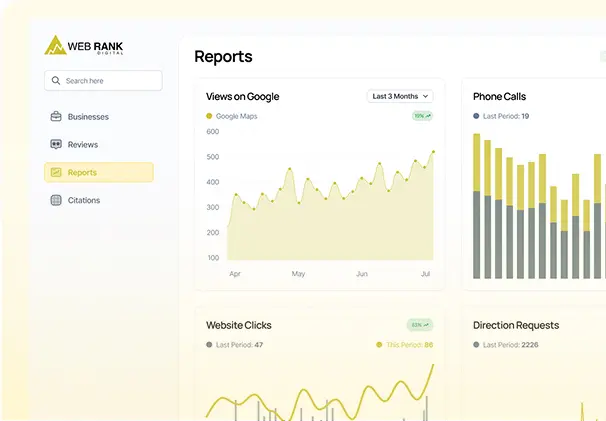
What to watch: Centralized reporting is critical here. Without it, you cannot compare performance across markets or spot trends. Implement a system that captures lead source, location, and stage of the funnel in real time. This lets you see which campaigns are generating qualified leads and which are wasting budget. Tools like webrankdigital.com offer such centralized tracking, helping you keep a single view of all your markets.
Step 4: Create scalable workflows for campaign consistency
Consistency in messaging, branding, and timing builds trust with potential customers. But as you add locations, maintaining that consistency becomes harder. The solution is to design workflows that automate repetitive tasks while leaving room for local input. For example, you can set up email sequences that trigger based on lead behavior, with local offers inserted automatically. Social media posts can be scheduled from a central calendar, with each location customizing a portion of the content.

What to watch: Over-automation can make your outreach feel robotic. Balance efficiency with personalization. Use automated funnels to handle the heavy lifting, but train local teams to add personal touches where they matter most, such as responding to comments or following up on hot leads. A good rule is to automate the distribution but keep the conversation human.
Step 5: Monitor and optimize using market intelligence
Once your process is running, the work does not stop. Multi market optimization requires continuous improvement based on data. Track metrics like cost per acquisition, conversion rates, and customer lifetime value for each location. Compare these against your benchmarks and look for outliers. A location that is underperforming may need a different channel mix or a revised offer. A top performer may reveal a tactic you can replicate elsewhere.
What to watch: Do not rely on aggregate data. A single average can hide big differences between markets. Always drill down to the location level. Use competitor analysis to see what others in each market are doing differently. This intelligence helps you spot opportunities and avoid threats before they become problems.
To support this ongoing optimization, many businesses use a platform that combines market intelligence, competitor analysis, and lead tracking in one place. webrankdigital.com is one such solution, designed to help businesses find opportunities and grow across locations without getting lost in spreadsheets.
Step 6: Document and train the process for repeatability
A process is only repeatable if everyone knows how to follow it. Create a simple playbook that outlines each step, the tools used, and the key metrics to watch. Include examples of what success looks like in different markets. Train new location managers on this playbook, and encourage them to share their own learnings back to the central team. This creates a feedback loop that improves the process over time.

What to watch: Keep the playbook living. As you find better tactics or new channels emerge, update the document. A static playbook becomes obsolete quickly. Schedule quarterly reviews where teams from different locations can compare notes and suggest improvements.
Putting it all together
Creating a repeatable customer acquisition process across multiple locations is not about finding a single magic formula. It is about building a flexible system that adapts to local conditions while maintaining a consistent core. By defining channels per market, customizing funnels, standardizing lead tracking, using scalable workflows, monitoring with market intelligence, and documenting the process, you can turn expansion from a gamble into a reliable growth strategy. The key is to stay disciplined about data, open to local input, and willing to refine your approach as you learn what works in each unique market.